Up The Down Escalator-Back To Sydney

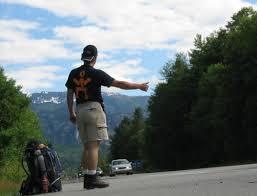
Don’t remember much about the trip to Sydney or why I chose to go back. One event stands out – I caught a ride one evening which left me off in a desolate place, well after dark. Further rides that night were not an option. I found a fair place to camp and tried with stunning failure to light a campfire, ate some cold munchies I was carrying and began to think about all of the deadly snakes that terrorize the jungles of Queensland and decided I wasn’t really all that tired. I started to walk and kind of got into a good stride. All though, there was a lot of physical exercise crewing, I hadn’t really walked more than 50 feet at a time and, even with my heavy pack, it felt pretty good. At one point, I came across a bunch of truck drivers who told me they were taking the state mandated time off to sleep, but these guys were talking and smoking and tossing back a few beers. We talked for a while, but they were going to be stopped for a while, so I kept on walking.

Sometime later, I began to hear rain up in the trees. It sounded reasonably heavy, but I wasn’t feeling any raindrops.

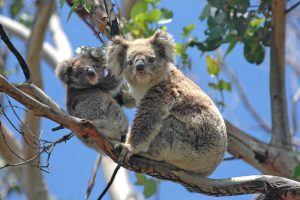
It took me a while to figure out that I was hearing a large group of koala bears climbing around and chewing leaves!

Up The Down Escalator-Typhoon Part 3

Later that evening I was able to make radio contact, explained the situation and asked them to decrease their speed which they did and though the bow sprit continued to smash into the port bow, it did so with much less frequency and much less force.

It was another sleepless night, but by dawn the typhoon had decreased in intensity. We spent some time jury-rigging support for the mast which was still moving around in a very unsettling manner and eventually got the broken bow sprit up on deck and lashed down. We then settled down feeling somewhat more secure.

Sometime during the afternoon, we heard some shouting and looking aft, discovered a trawler pulling up behind us. There were several blokes on their foredeck, all dressed in suit and ties, but barefoot, who were getting bounced around in the still large swells. One had a camera and was yelling at us to all come out on deck and to wave. Three of his mates were trying to steady him, one on each leg and the third, holding is the back of his pants. It was the funniest thing we had seen in several days, so we happily waved and mugged. Questions were yelled at us, but with the noise between their engine and the wind, not much was communicated. Several more photos as they passed and a wave good-bye.

We reached the entrance to Mooloolaba, a small coastal, mostly fishing town, about 100 kms north of Brisbane. Our tow boat radioed to inform us we would have to hove to in the bay entrance and wait for hightide, around midnight, to get over a sand bar at the entrance.

Kris and I were up on deck and she pointed out a what appeared to be a large group of birds perched atop the distant seawall. It was getting on toward dusk and they were difficult to see, but I opined that maybe the birds were waiting for some kind of fish run to begin.

Around midnight our towboat’s engine fired up and guided us into the harbor. As we approached the entrance, all those birds turned into people who had been patiently awaiting our entrance. A large cheer broke out and we were totally taken aback.

When Radio Brisbane rebuffed our Mayday calls, we assumed that we were truly on our own. We figured that the arrival of the Bogong and the shrimp boat were totally fortuitous. Now the large crowd who had waited for several hours in the dark for our arrival, caused us to rethink everything.

Turns out, Australians love sailing and sailors and especially Americans and most especially American, female sailors and our female crew had been having a great time in Sydney and some of the blokes they had gotten to know, were planning to drive up to meet them in Brisbane. When reasonable time had elapsed with no contact from the ladies about arrival in Brisbane and with the typhoon, they figured out we might be in trouble. These guys were well connected and got ahold of the authorities, especially Radio Brisbane and then the local media with the story and we had became the breaking news for a good part of the week.

We pulled in and tied up to some pilings about 15 feet from dry land where cheering Australians had been standing for several hours. This did not deter several reporters from rolling up the suit pantlegs and carrying their lights, cameras and tape recorders, wading out for our first interviews. Jack, very wisely, had prepped us when we realized what was happening, to deflect any interviews to him. That left us off the hook, so all we had to do was mug and deal with the curiosity and some adoration.

Finally our fifteen minutes of glory were over and it was time to crash. We were headline news the next day and that evening appeared, simultaneously, on all three Australian TV network stations. Long biographical information on Jack and the three ladies. The best I could muster was “and a fifth, unidentified crew member”! Oh well…


The next several days we cleaned up the boat as best we could and talked about how incredibly fortunate we were not to be dead.

Jack got us together and said we were going to throw a party for our rescuers and their wives. We all thought that was a really great idea, but Jack said there was another reason…because we had put in a Mayday call and they had thrown is their line, they probably had a claim to Ta’aroa. So with this in mind we put together a party and invited our rescuers. They appeared up with the requisite quarts of beer. The guy who owned the rescue boat, was a coastal shrimper and his wife and his crew. An associate, who was a deep-sea shrimper and his crew and a local cop and his wife.  We asked how they happen to be out there and with some disbelief, they explained that they had heard our mayday calls and realized we were in a really bad situation. They contacted each other and set out. It took three days to catch up with us. Man, you’ve got to love Australian sailors! The party was going well – really nice folks and lots of sea stories, but we were waiting for the discussion which could change all of our lives. Finally, the conversation found Jack, in an uncharacteristically nervous voice asking, “So, we obviously are indebted to you and would like to know if there is anything we can do to repay you for your bravery and efforts”. The shrimp boat captain replied, “We understand that after two or three transmissions to Radio Brisbane/Australian Coast Guard you got no assistance. Would you mind writing a letter to the Queensland government detailing you experience. We have been fighting this battle for years and your input would be most helpful.” Our response was, “Hell yes! Anything else?” “No that would be most helpful and we would appreciate it.” At this point the party really took off and we carried on for many more hours!

They wanted us to meet their friends and after we were still headline news and these guys were doing their share of basking and so they threw several parties for us. Two things stand out in my memory. There were lots of “Shrimp on the barbie” and they were what I called “Three bite shrimp” which was how they were consumed – three large mouthfuls per shrimp. The other was that when guests appeared and they had a lot of friends, the host said he loved it when they had to knock with their feet, because their arms were full of quarts!

We than got a tow from Moolulaba down to Brisbane. There Jack engaged a local boatyard to begin the long job of getting her back to her former self. The crew took this opportunity to go its separate ways. Jack and Kris had decided to finish their relationship and when Kris left, Nancy departed with her. Barbara may have left with them, but came back and continued to crew with us. I took a holiday by hitching back to Sydney. I think Jack was just as happy to see us all leave for a while, so he could recover, after he had full responsibility for yacht and the crew and he was very serious about that. Our safety was of much concern to him and we had been in some pretty dire straits.

D

Up The Down Escalator- Typhoon Part 2

After several days of this monotonous chaos we spotted a very large ship approaching. They were rocking and rolling in their huge way, but not a wildly as we were. They made a slow approach and began several wide circles around us. They then began pouring oil into the water and we realized they were attempting to flatten the waves so we could abandon the yacht in our life raft. Jack said, “We’re staying on the boat…no way we’d survive in our flimsy life raft in these waves!” Then he yelled to me, the communications officer on the yacht, “Tell them we want a tow.”

The roar of the wind and their engines obviated yelling, so I grabbed the Boy Scout manual and a flashlight and proceeded to flash – “Dash / dash dash dash / dot dash dash”. After several repetitions, their signalman shot a rapid fire of dot and dash flashes none of which I got. So ever resourseful, I jury rigged two signal flags and jumped to semaphore with pretty much the same results. While continuing to screw around in this manner, I was suddenly joined by Barbara with a large white sheet upon which she had spray painted in large red letters, “TOW”. (This was the beginning of my realization that tho women clearly thought and reasoned differently, their insights and reasoning was to be sought and respected}

The Bogong’s crew acknowledged our message and prepared to send us a tow line. While this was all transpiring their bridge lost track of our relative position and suddenly we were pointing directly at her. The next wave caught the boat and drove her directly into the carrier’s side with such force that our bow sprit snapped, literally, like a match stick.

The bow sprit extends out from the bow at deck level. It is held in place by the forestay attached to the mast and the bob stay attached to the bow at the waterline. Its main purpose is to provide forward tension and stability to the mast. It works in conjunction with the back stay or in our case running backstays and the shrouds which support the mast on the starboard and port sides of the vessel. Each shroud has a piece called a spreader which is attached to the mast and forces each shroud further away from the mast. The result is that the mast, seated on the keel, is held in position by these four pieces of rigging.

Colliding with Bogong spun Ta’aroa, our starboard to her port and with each wave banging down her side. As we proceeded crash down along her side, I was standing on the starboard deck with Barbara, who was still holding the sheet, both of us trying to assess our situation and determine what we should do next. The Bogong had her screws slowly turning to maintain steerageway and we were quickly moving back toward her stern. Because of the shape of her stern, we were moving under her and our mast was beating against her side. One wave drove the mast against her and snapped the starboard spreader. Suddenly our fifty foot mast, now being deprived of two of its four means of support was virtually balancing on the keel with only the decking holding it in place. To add to the drama, we were now at Bogong’s stern and when a wave lifted her, her dual props were splashing a lot of ocean on to us. Barbara and I shared a glance which assumed we would be cut in half and which part would be the best to be on. I heard a shout from above. One of their crew saw our predicament was yelling to the bridge. A moment later both screws accelerated and to kick her stern away from us and for the moment out of danger.

Bogong stood off for a moment while they prepared for the next act.

At this point, one of their hearties should have grabbed a line and thrown it to us to commence with the towing. They, however, apparently had a new device which would shoot a metal projectile with an attached line to us and they were finally going to get a chance to use it.

Their initial attempt had the metal piece crash around the bridge with crew diving and running about to avoid getting hit. The second, badly aimed and with the gusting winds, missed us by some distance. The third, same result as the first. Finally, the fourth attempt wrapped the line around our mast. We grabbed it and pulled the much thicker line and then a very thick hawser on board and attached it to our bow. We gave them the go ahead and they started off.

Clearly the captain had spent some time driving a water-ski boat and wanted to make up some lost time. Don’t know how fast he was going, but we were crashing thru waves that were still huge. With great trepidation, we watched our mast, held vertical only by the decking, move around in a very unsettling manner. So, Jack gave an order, “If you have to go out on deck, do not use your safety harness!” The reason being that with the mast flailing around, should it come down, you couldn’t be screwing around trying to detach your harness to get out of the way. It also meant, should you lose your balance and start to go over the side, there was nothing to keep you on board. The last thing you would see is the sterns of both vessels as they disappeared at an alarming rate and you had not many moments to consider the life you had led and were about to depart.


Shortly after I had given our first Mayday transmission, Jack put on his sea lawyer hat and ran over the laws pertaining to boat salvage. Apparently, a Mayday call means we are about to die – please save us, our possessions and the boat are yours. However, if you throw a line to the towing vessel, or not having an adequate towline yourself, offer to buy to buy the one they throw to you, means you weren’t in that dire set of straits and they weren’t really saving your lives, merely giving you a friendly tow. There was no way to go thru all that song and dance when the Bogong appeared, but when a while later a shrimp boat appeared and then pulled alongside, Jack yelled over thru the still raging wind and rain, “What are you guys doing out here??” They gave him a very funny look and indicated they had monitored our several Mayday calls and had spent the last several days motoring out  to give us hand. At that point, we detached the Bogong’s hawser from our bow; retrieve the towing line from this new vessel and rig it to our bow with the boat still climbing and crashing over huge waves. (NB: Just prior to our pickup, they were recording wave heights on their depth sounder that were running about 30 feet with one at least 35.) So, Jack never got to ask them if he could buy the towing line.

By now night had come upon us, which meant we had the relief of not being able to see the size of the waves, but could still feel them. These folks had a lot better idea of how to tow I rough weather, but we were still going way too fast, they were not aware of the unsupported mast.

With all the noise produced by the wind and waves, it took a while to realize there was an occasional loud pounding on the port bow. “OK”, Jack said to me, “Let’s see what’s going on.” I really didn’t want to, but knew we had to. This was my sixth day on a round-the-world yacht and I was beginning to wonder about the lack of romance.

Up on the bow, we realized we had a serious problem. The bow sprit which had snapped off when we careened into the Bogong was still attached to the forestay and the bob stay and occasionally when the wave pattern was just right, the eight foot long piece of solid mahogany was being driven directly into our port bow. One lucky shot and we’d be breeched.

So our job was to time the waves and the pitch of the boat and attempt to wrestle the broken piece onto deck. Once there, secure it – problem solved. We nearly had it several times, but the waves always clawed it back. Finally, exhausted, we gave up and tried to signal them with our torch to get them to slow down. Unfortunately, they had us on a long line and the waves kept getting in the way, even if they happened to be looking back.

Now on the bow with the torch and not holding on, we suddenly came off an exceptionally large wave and I was airborne. Without my lifeline, I was no longer connected to the yacht which had dropped totally out from underneath me. A moment later, she went into a trough and Jack, also untethered, reached up and grabbed me and I came crashing down on top of him, causing him some injury to his wrist, which he wasn’t aware of until the adrenaline wore off some time later.

Jack said, “Fuck this!” and we quickly, but cautiously crawled back into the cabin.
Up The Down Escalator-Typhoon Part 1

Might be Elaine 13-19 Mar 1967…..More likely Glenda 26 Mar to 06 Apr 1967

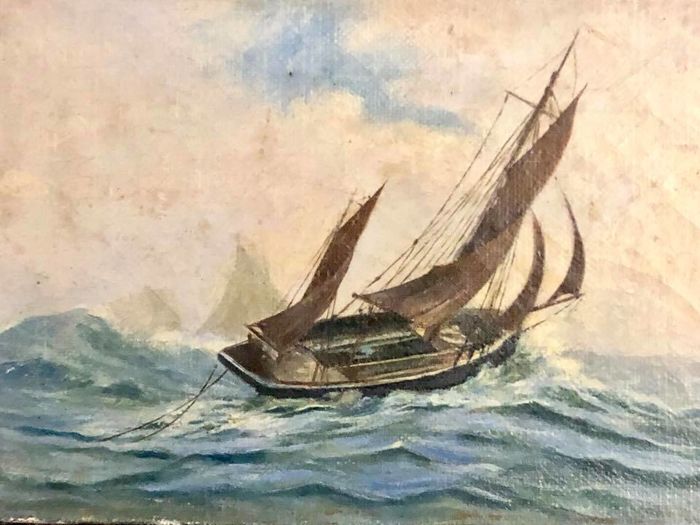
It was a rough sail up from Sidney. I experienced some mal de mar and watched a rough sea from the deck of a 50-foot sailboat rather than the flight deck of a 900 foot aircraft carrier for the first time. We sailed into Moreton Bay and found the tide was running against us and the winds light and fluky. So with the engine was out of commission, dropped anchor to wait for the tide to reverse and winds increase to give us steerage.

Sailing up the river to Brisbane without an engine was going to be a bit problematic, so we put a call into Radio Brisbane to request local knowledge.   Shortly, a 75-foot coast guard cutter came along side. They dispatched a nice young officer with some additional charts of the bay and the river. He gave us some very valuable information while also checking out the boat and the ladies. Australians have great respect for sailors, especially female sailors.

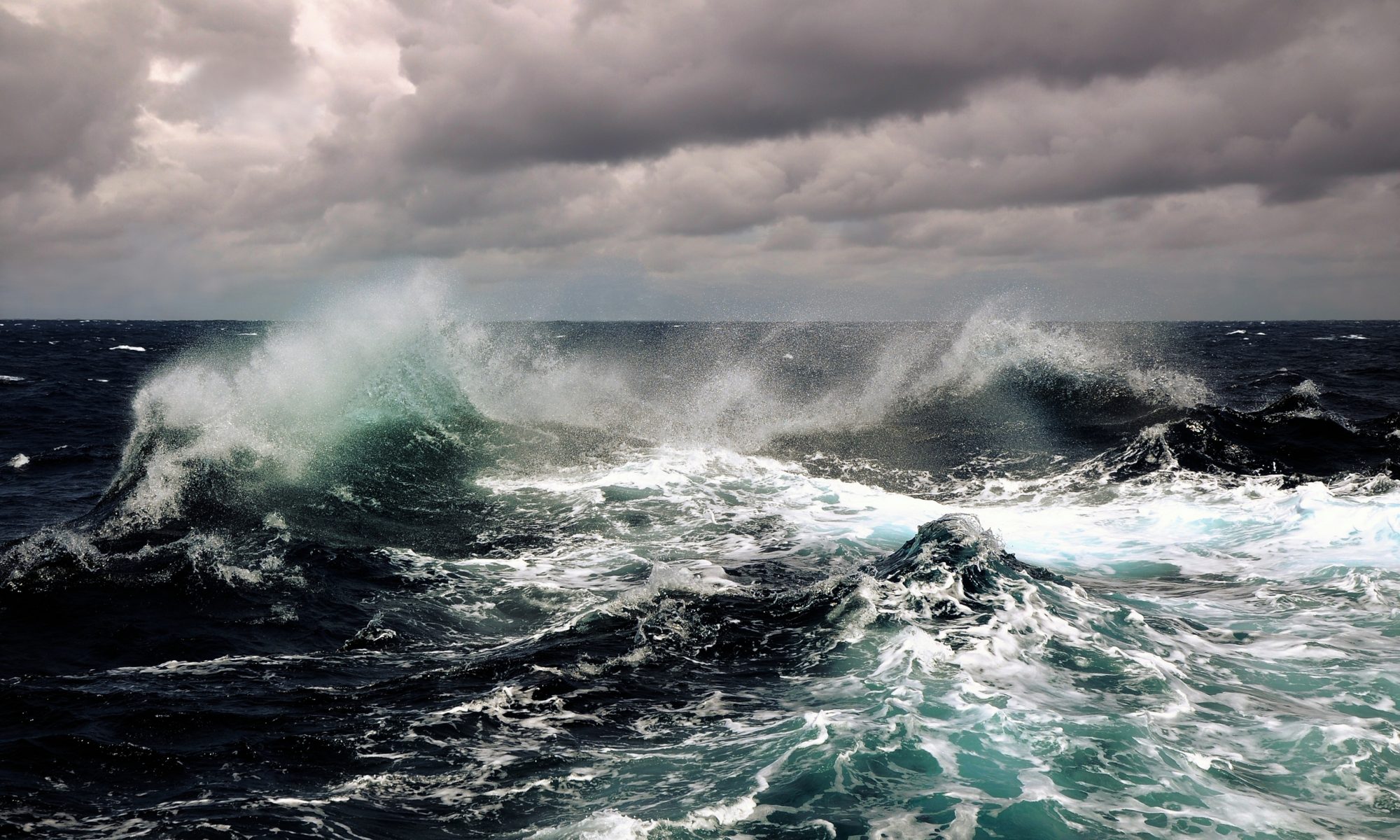
The next morning, I was up on deck with Kris surveying our situation. The wind had swung to the south and increased substantially. The heavy, very dark gray sky had colored the sea a greenish-brown hue and the waves were big, broad-shouldered and slow something like the offense line on an NFL team. As each wave hit, the yacht shuddered and was hobby-horsing on her anchor. Kris may have detected my rising concern – first time out, rough passage from Sydney, looking forward to standing on firm ground in a Brisbane pub and now this – pointed to a patch of blue sky that was visible thru the windblown, fractured, scudding clouds and suggested things were looking up. Within half an hour the wind had further increased and now the anchor was dragging. We deployed [launched] our second anchor which took hold, but this was juried rigged and only secured to the boat by tying it around the anchor winch without a fair lead over the side. We had as much line out as we could and Jack was considering adding another line to increase the scope, when he noticed that because the second anchor line did not have a clean lead over the bow, the motion of the boat in the waves was literally sawing thru the line. He found a piece of leather about a foot and a half square and sent me forward to wrap it around and secure it to the second anchor line as chaffing gear. I was working on that project when a big wave hit and the line parted like a shot. It just missed taking off several fingers. Now with that anchor gone and we immediately began dragging again.

I was a bit shaken when I returned to the cockpit, but Jack asked me to give him a hand. He had pulled out some large pieces of precut plywood which fit exactly over each of the windows on the sides of the main cabin. As we were screwing each board over a window and into the beautiful mahogany frame, I realized that with good reason Jack was taking this very seriously and it would serve me to get serious myself!

Several hours later, we had put up our smallest sail, the staysail, so we had some little control. This would give us the ability to move forward, but without much speed and to some degree steady the violent motion caused by the waves. Steerage, however, was now a huge problem when we discovered that at some point dragging out of Brisbane Harbor we had dropped down on a sandbar and shattered our rudder. It was gone!

Jack was a great skipper. His main concern was the safety of the crew. Bottom line – any ideas which we had to better our situation were balanced off against the potential danger. We launched two sea anchors – large accumulations of cloth and other stuff which were tied together and dragged off each side of the fantail on long lines which to some degree stabilized the motion of the yacht and held her on a steadier course.

As the day wore on we began to settle into our situation – one anchor left merrily dragging along and useless; the diesel engine totally out of commission; the rudder shattered, so no real way to steer; winds climbing to the typhoon stage; waves that were rising in height and becoming more chaotic because the trains that were being generated by long fetches in the heart of the typhoon were being reflected from the coast we were paralleling causing extremely confused seas.

One of the interesting things we found out about ourselves was revealed some time after we returned to relative safety. Barbara received a letter from a woman which stated that God had told her that Barbara had prayed to God to save her and that if He did she would become a Christian. Barbara swore that no such supernatural request on her part had ever happened and from what I know of her, I believe her. But this sparked a discussion among us which revolved around our level of fear. I didn’t remember any fantasies of giant waves crashing over us or other methods of quick demise. Our consensus was there had been no time for those thoughts. Just deal with the situation of the moment.

Double Island Point named by Capt Cook 18 May 1770.

Jack calculated that we were approaching rapidly and instructed us to be ready to quickly abandon ship and to that end, pack up anything we wanted to save and to further facilitate, a speedy departure, sleep sitting up in our foul weather gear. I very heroically went around picking up several books, letters and personal items and my favorite tee shirts until I noticed the ladies were packing first-aid, water and food. Oh, I get it, so I junked my treasures and helped with survival items. It then occurred to me that the five of us in our rubber dingy in that sea would be immediately doomed regardless.

We avoided colliding with Double Island by using our staysail. Normally it wouldn’t generate much drive, but with the hurricane force winds, we smoked right along.

Because of my Navy background in communications, Jack asked me to make an emergency call to Brisbane. I took some perverse pleasure in making that call. “Radio Brisbane, Radio Brisbane, This is the yacht Ta’aroa. We are in a mayday situation! Do you read? Over.” After several repeats, Radio Brisbane acknowledged and with further prodding on my  part, said they would look into the matter. I repeated the Mayday call the following day and received the following response. “Which yacht??”. After I restated our situation and pressed them as to what actions they had taken on our behalf, it was clear they didn’t have a clue. I called back later that day and they said they had contacted their largest, most seaworthy vessel, the 75 foot cutter which had delivered the charts of Brisbane River to us several days before and they informed us that there was a full blown typhoon and there was no way she was going to leave port. Wonderful!!

So we settled into a routine of standing our watches in the cabin, sticking our heads out occasionally to look for any traffic or anything egregious happening topside, but definitely not going out on deck.

At some point, I noticed that I really had to take a pee and while not especially seasick, I knew getting into the claustrophobic head with its smell and nausea producing tight vertical stripped wallpaper would finish me off, so I held it for several long days. That doesn’t mean I didn’t fantasize numerous methods of relieving myself, but having to get out of foul weather gear using a very short phallus, well it wasn’t the only time I regretted not being extremely well endowed. One plan had me lying on the dining table, cracking the window and feeding the mighty whang out onto the deck. There were several reasons that didn’t work.

Anyhow, this routine continued. The wind was clocking a steady 100 knots, gusting with greater intensity. The huge waves continuously beating the boat moving her all directions, then suddenly, all motion would totally cease and I would grasp at the idea that the storm was over and we would soon be in port on dry, unmoving land, only to be thrown down another wave face into the trough of the next monster wave.